Skin, in all its varied colours and contours, textures and tones, tells us a story about what lies beneath and beyond its surface. As a dermatologist, caring for patients with skin disease calls for me to decipher these stories. Some of my own most valuable lessons in reading skin come from one of my fondest pastimes – painting.
Growing with art
The joy of painting was something that I was fortunate to be exposed to as a child. From the potato prints I made with my grandmother to the whimsical watercolour illustrations of the bedtimes stories my mother used to read to me, I was surrounded by art. I believe this is what ignited my passion for painting.
Under the guidance of an inspiring art tutor, I was exposed to a variety of media: oil pastels, oil paint, watercolour, acrylic, pen-and-ink and charcoal. Though art has always been a hobby rather than a profession, I have kept it alive through the years, finding moments here and there to immerse myself in a painting. In return, art has enriched my practice of medicine.
Wrapping up my internal medicine junior residency, serendipity led me to a dermatology posting which I enjoyed enough to pursue a dermatology senior residency. Of the many aspects of dermatology that I was drawn to, one that resonated particularly strongly with me was the visual nature of the specialty.
From a diagnostic perspective, reading a patient's skin is much like appreciating artwork – we observe and decipher form, colour, texture and patterns, piecing together all these elements and diagnostic clues in the right context. Art and dermatology both require the observer to interpret layers of visual information, which may at times be ambiguous. Working with inspiring clinical mentors is similar to learning from the work of the great masters of painting – there are always more details to notice, more clinical clues to appreciate. In short, there is always room to sharpen our observational skills.
From a therapeutic perspective, it is satisfying to see a patient's skin condition improving during long-term follow up. Take for example the clearance of psoriatic plaques on a patient who recently started biologic therapy, the repigmentation of vitiligo patches, or a barely visible surgical scar. Like seeing a painting come to life with each brushstroke, the visible proof of successful treatment is immensely rewarding.
Appreciation and empathy
Formal training programs have also acknowledged the importance of using fine art in developing visual intelligence and observational skills. For example, Harvard Medical School's dermatology residency programme has partnered with the Museum of Fine Arts Boston to offer a course that teaches observational skills to dermatology residents.
While the science of medicine requires us to measure, categorise and analyse information, the art of medicine urges us to listen, observe and understand our patients as fellow human beings. Paintings are laden with emotion and steeped in history. This makes it impossible to fully understand an artwork without knowing the artist's background and cultural context. Perfect examples are Claude Monet's famous waterlily paintings which became increasingly abstract as his eyesight deteriorated due to cataracts, and the turbulence of Vincent van Gogh's inner world that whirls and swirls up in the skies of The Starry Night, which he painted during his time recovering at a psychiatric hospital in Saint Remy.
I have learnt that appreciating art teaches us to deepen our empathy and perceive diseases from the patient's perspective, to understand the psychological impact and quality of life burden that lies beneath the visible skin lesion. Tuning in to the human side of medicine requires us to develop patience. Like medicine, painting is a practice where patience is essential (we must wait for each wash of watercolour to dry before applying the next) and richly rewarded (Leonardo da Vinci famously layered multiple thin transparent oil paint "glazes" to render human skin with remarkable depth and luminosity).
It was only during my dermatology training that I realised how traditional textbooks are often biased in terms of skin colour, underrepresenting non- Caucasian skin tones in clinical images. Brushwork appears different based on the colour of the canvas. Psoriatic plaques that appear salmon pink in fairer skin often appear purplish, brown or even grey in darker skin. Clinicians have recognised the importance of inclusivity and increasing efforts are being made to depict skin conditions in multiple skin colours and various races, to allow us to diagnose them across all skin types.
Painting diverse subjects has taught me how my own observational biases show up in the most unexpected ways, while reminding me to stay attuned and culturally sensitive. For instance, vitiligo profoundly impacts our darker skinned patients' sense of self-identity, given the more visible contrast between normal and depigmented skin. Much like objects in a still life may have inherent symbolism that the artist needs to be aware of, communities may have strong cultural beliefs surrounding certain skin diseases. Educating patients requires us to respectfully navigate these beliefs.
An enriching journey
I am first and foremost a clinician, so painting to me is a fond hobby – an outlet that helps me relax and balance clinical rigor with reflection, and one that immensely enriches my experience of being able to truly understand my patients beyond their skin. Though a career in medicine and being the dad of a toddler means that I now have less time for art, I have come to truly cherish those rare moments when I do get to paint.
In many ways, art imitates life. The messiness and imperfections, the uncertainty until a clear form emerges and the devotion demanded of the artist to keep painting until they have achieved the desired effect by observing light and shadow, playing with colour and experimenting with composition – these mirror the feelings we all experience as we strive to better understand our patients, shape their treatments and guide them through the unfolding canvas of their treatment journeys.
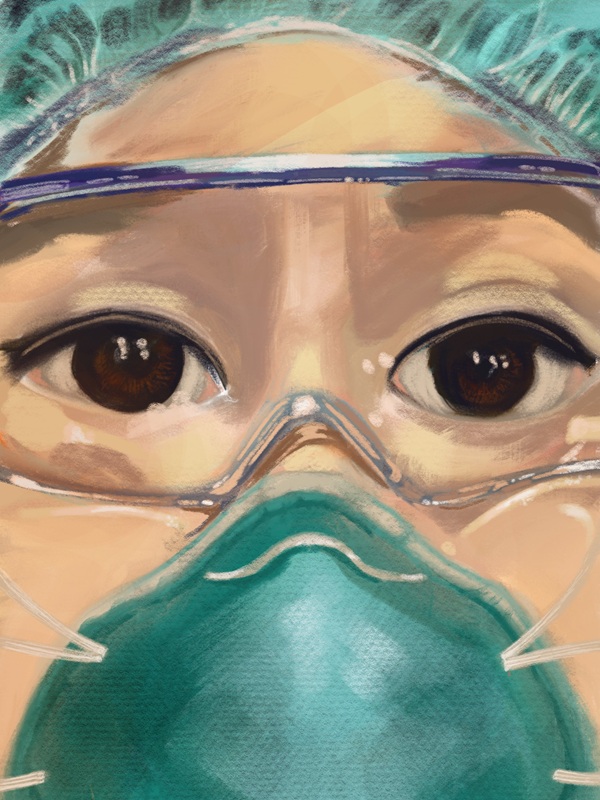
Hero
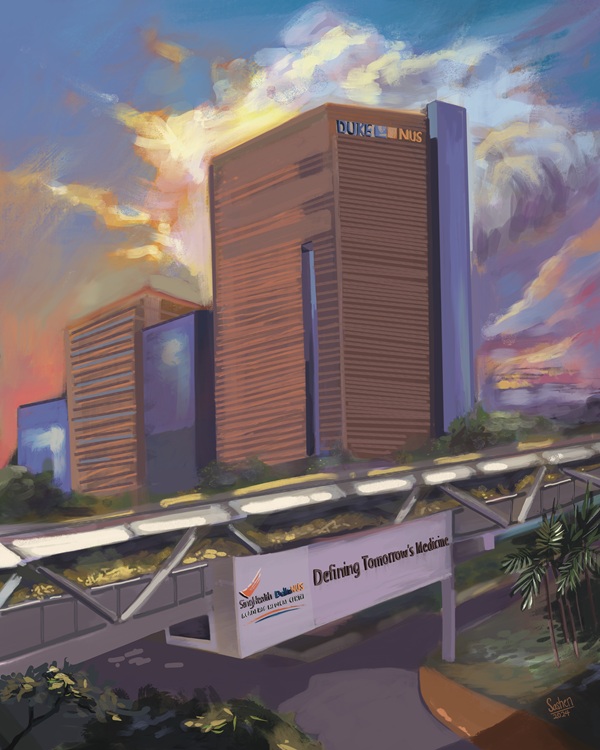
Duke-NUS Medical School
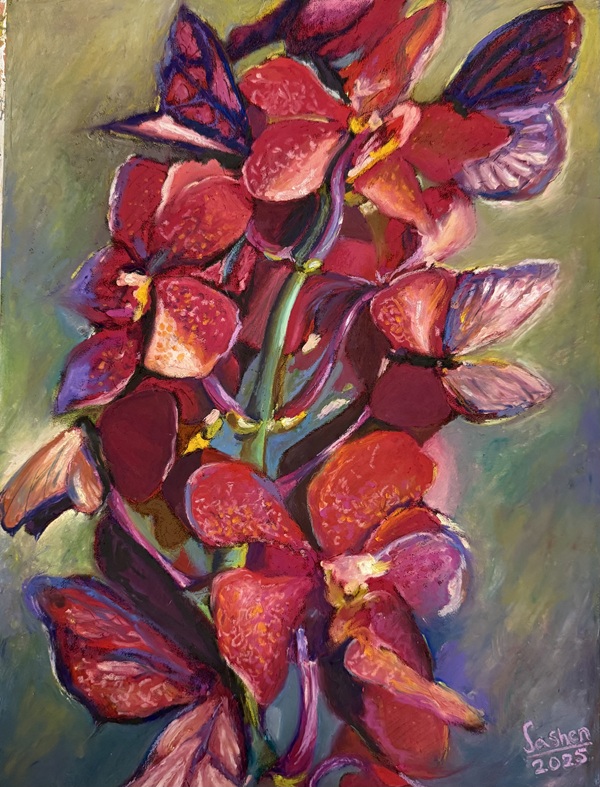
Kissed by Moonlight