In Singapore's restructured hospitals and private clinics, a familiar pattern persists: we treat the acute manifestations of chronic disease. We manage the HbA1c of 9.5%, the sudden ST-segment elevation myocardial infarction and stage IV renal failure. While the "Singapore Model" excels at crisis management, the ageing population and the ubiquity of the "three highs" (hypertension, hyperlipidaemia and hyperglycaemia) are exposing the cracks in this reactive, pill-first model.
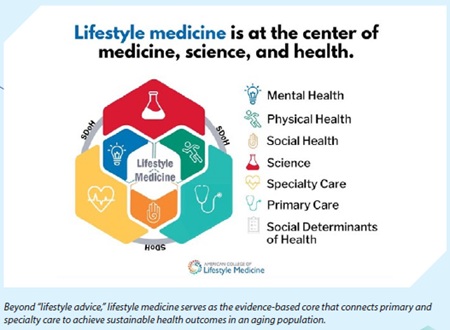
Enter lifestyle medicine (LM). Once dismissed as "common sense", LM has emerged as a rigorous, evidence-based framework. It is no longer a luxury; it is the clinical backbone of the Healthier SG initiative and a vital tool for the sustainability of our healthcare system.
What is LM?
LM uses therapeutic lifestyle interventions as a primary modality to treat chronic conditions. Unlike hurried "eat less, move more" advice, LM is a structured clinical framework centred on six pillars: whole-food, plant-predominant nutrition; regular physical activity; restorative sleep; stress management; avoidance of risky substances; and positive social connections.
The scientific basis for LM has strengthened substantially over recent decades. Large-scale epidemiological studies consistently demonstrate that adherence to multiple healthy lifestyle behaviours is associated with substantial reductions in the incidence of chronic disease and premature mortality. Interventional studies further support this causality. For example, the Diabetes Prevention Programme showed that intensive lifestyle intervention reduced the incidence of type 2 diabetes more effectively than pharmacological therapy.
Beyond prevention, clinical trials suggest that comprehensive lifestyle interventions can influence disease trajectories. In a landmark randomised controlled trial published in JAMA, intensive lifestyle changes were associated with regression of coronary atherosclerosis and fewer cardiac events over time. More recent work has extended these findings to other domains, including cognitive health. A 2024 randomised controlled trial demonstrated that a multimodal lifestyle intervention – combining whole food, plant-predominant diet, physical activity, stress management and social support – led to measurable improvements in cognition and function in patients with early Alzheimer's disease.
These findings highlight a central principle of LM: behavioural change can translate into measurable biological effects, even in established disease.
Clinical relevance: why now?
For the Singaporean practitioner, LM is driven by three factors. First of these is the Healthier SG initiative. The Ministry of Health's transition of focus from "healthcare" to "health" requires doctors to move upstream. LM directly complements this strategy by providing the clinical concepts and practical tools necessary to implement prevention. By prescribing specific, evidence-based lifestyle "dosages" rather than offering vague advice, we can achieve outcomes that medication alone rarely reaches, such as the clinical remission of early-stage type 2 diabetes.
The second factor comprises polypharmacy and patient safety. With many elderly patients taking five to ten medications, LM offers a pathway to deprescribing. When a patient loses weight through nutritional intervention and improves insulin sensitivity through resistance training, his/her need for anti-hypertensives and oral hypoglycaemics drops. This reduces the pill burden and improves his/her quality of life.
The third factor driving LM is economic sustainability. National healthcare expenditure is projected to hit $27 billion by 2030. Integrating LM reduces high-cost acute admissions and expensive complications like dialysis.
Benefits to practice: beyond the numbers
LM shifts the doctor-patient dynamic from the doctor as "fixer" to the patient as "driver." This can result in improved job satisfaction, as many doctors suffer from burnout because they feel like they are merely managing decline. Seeing a patient successfully reverse a chronic condition through lifestyle changes is one of the most rewarding experiences in medicine.
LM can also result in enhanced patient autonomy by empowering patients. When patients understand how sleep hygiene affects their blood pressure, they gain a sense of agency over their health that a prescription pad cannot provide.
The "elephant" in the consultation room
Despite its benefits, the path to integrating LM in Singapore is fraught with challenges, both for physicians and for society at large. One challenge is the time constraint. A standard ten-minute consultation is insufficient for deep-diving into habits and psychological barriers. Current billing structures often reward volume over value.
Another challenge is the cultural paradox. Singapore's "food paradise" often features fibre-deficient, refined carbohydrate staples like fried kway teow, lor mee or chicken rice. Overcoming the cultural perception of "deprivation" is a challenge, yet the local landscape offers powerful alternatives. Practitioners can guide patients toward fibre-rich options like thunder tea rice (lei cha), plant-based yong tau foo (with extra greens), or traditional Malay ulam.
A third challenge involves professional training gaps. Medical curricula traditionally favour pharmacology over exercise physiology or nutrition. Many doctors feel ill-equipped to prescribe specific strength-training programmes or nutrition interventions.
Lastly, the "quick fix" mentality also presents a challenge. Some patients may prefer metformin over a 30-minute walk. Shifting from passive treatment to active prevention requires a societal change that doctors cannot lead in isolation.
The way forward: a call to action
To evolve, we must focus on three areas.
Multidisciplinary teams
We must adopt "team-based care". Doctors provide medical oversight, while allied health professionals such as health coaches, psychologists and dieticians provide intensive behavioural support.
Advocacy for policy change
We must advocate for insurance and Government reimbursement of lifestyle interventions. A systemic approach coordinating community-based programmes, partnering with businesses, subsidising workplace wellness initiatives could further support long-term behavioural change.
Physician, heal thyself
We cannot authentically prescribe what we do not practise or understand. Credibility depends on integrating LM training (including nutrition, exercise, behavioural counselling) into medical school and residency, ensuring that physicians in all specialties are equipped to model healthy behaviours and apply self-care before guiding their patients.
Conclusion
Lifestyle medicine is not "soft" science; it is evidence-based care addressing the root causes of modern epidemics. For the Singaporean doctor, it is an opportunity to return to the heart of medicine: the holistic care of the human being. As global demand rises, integrating LM into clinical education, practice and policy may be the most impactful strategy of the coming decades.
About us
The Singaporean Society of Lifestyle Medicine (SGLM) aims to advance LM through education, research and collaboration. Through webinars, case discussions, the "Walk with a Doc" initiative, and international certification via the International Board of Lifestyle Medicine (IBLM), SGLM champions evidence-based lifestyle medicine in clinical practice. SGLM organises the IBLM certification exam in Singapore for physicians and eligible healthcare professionals.