I have never thought of myself as a serious birder, though I have enjoyed going birdwatching with other serious birdwatchers in Sungei Buloh. But when an invitation to birdwatch in the Northern Moluccas, Indonesia was extended to me in August 2025, I saw it as a chance for another novel adventure.
I boarded my Scoot flight with two serious birders and one birding enthusiast (with whom I have been on previous adventures) and headed to Ternate and Halmahera via Manado. How was one to pack for this trip? I was told to pack clothing in muted colours so as not to stand out like a beacon in the forests, and bring comfortable trekking shoes, lots of insect repellent and a good pair of binoculars.
My travel companions (who have since become my friends) had hired a guide and given him a list of birds we wished to see. I was impressed by how organised and efficient our guide was. We moved in a convoy of a few cars and stopped at forests, plantations, beaches, mangroves or along mountain roads, where the guide knew a particular bird frequented or resided. Sometimes we waited in the open; other times we hid in hides. The guide used a tiny boom box speaker to play the bird call of a particular species to attract it. I was struck by how surprisingly "compliant" the birds were, almost always responding by appearing.
If you are wondering what all the fuss and excitement over sighting these feathered creatures is about, imagine playing Pokemon Go and needing to capture these creatures for your codex. Birdwatching is kind of like that, except birders aim to sight lifers for our life list. Before this trip, a lifer to me meant a person serving a life sentence for a crime. In birdwatching, a lifer is a bird that you see for the first time in your life. It was quite a thrill to sight at least 50 lifers on this trip.
I discovered that there are many phone apps that can aid birdwatching, which I could download onto my phone. By specifying the region that I am birding in, the app narrows down the species most likely to be found there. Some apps help identify the bird from a photo I take or a recording of its call. Old-fashioned pen-and-notebook lists are no longer needed, as I can submit my sightings online and share them with the birding community using the app.
One of the most thrilling moments was sighting the Wallace's standardwing, a bird of paradise. This bird looks anything but "standard", but I learnt "standard" refers to a flag. The bird has two triangular, flag-like, iridescent metallic green wings that jut out from the sides of its neck, as well as four antennae-like feathers that float upwards from its back. We had to set off at 1 am in order to reach Aketajawe-Lolobata National Park by 4 am, and then trek another hour and a half to reach the three-storey-tall hide where we waited in the darkness for the bird to appear. It is hard to describe the thrill of hearing these birds calling from a distance, gradually drawing closer, until suddenly six or seven of these strange and beautiful creatures landed on tree branches about ten metres away, performing their strange mating dance and singing their hearts out to win the heart of a female standardwing. As soon as it got light, they disappeared and the show was over. We then trekked through mud and streams back to our cars, elated.
Sometimes the guide would spot a bird in the distance and exclaim, "Look! Pacific baza!" and I would ask, "Where?" I marvelled at his skills in identifying birds, relying on his knowledge of their flight pattern, body and wing shape, call and preferred habitat. Often, I would confirm it by looking through my binoculars, amazed at his accuracy, when all I saw from afar was a blob.
Now that I am home, I feel the trip has made me more of a birder, even from my little porch at home. I can identify rose-ringed parakeets, hornbills or yellow-vented bulbuls by their call, and the blue-throated bee-eater perched on a lamp post by its shape and knowledge of its preferred spot. It is also fun to recognise a juvenile that has not yet developed all the colouring of the mature ornate sunbird. I suppose I might appear nerdy, but there is a newfound joy in the connection I feel with nature through birdwatching, along with a deeper awareness and appreciation of the natural world.
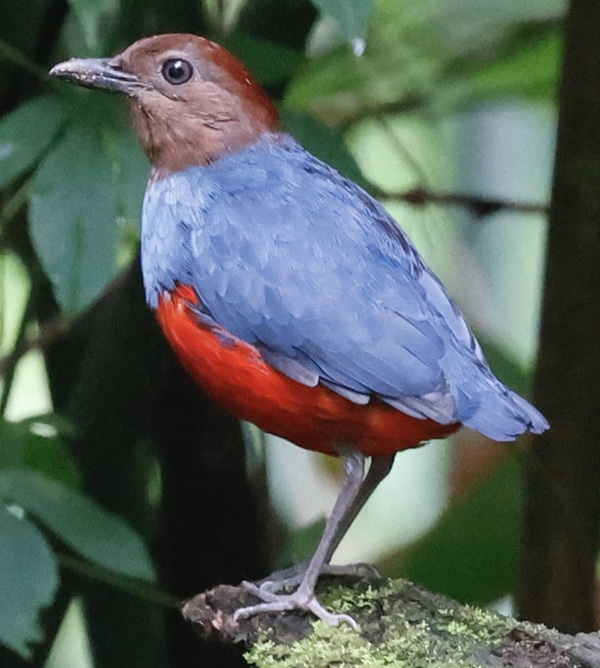
North Moluccan Pitta
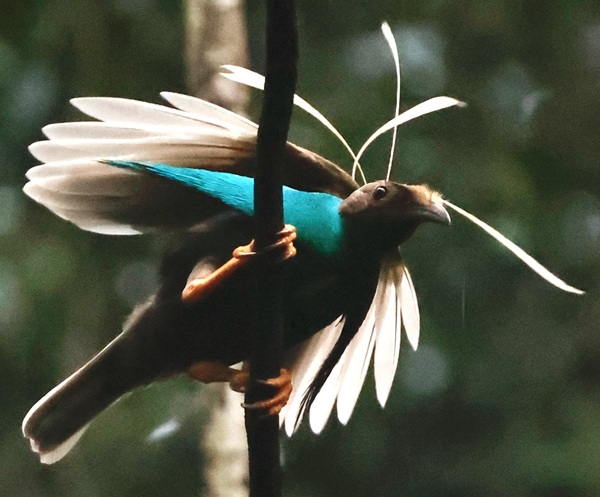
Wallace standardwing
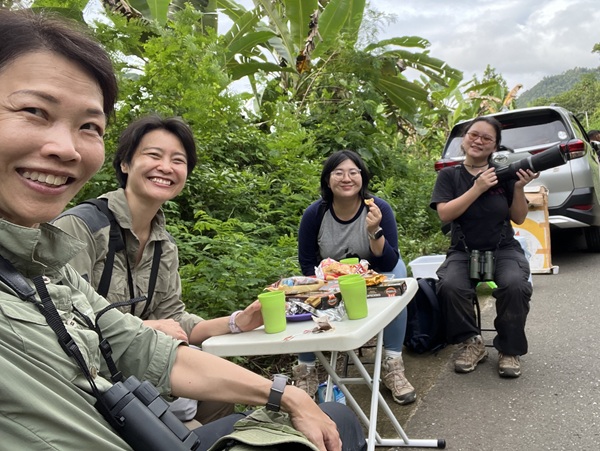
Tea break by the roadside
