Adj Prof Raymond Chua assumed the role of CEO of the Health Sciences Authority (HSA) in December 2024. He has held leadership positions in both the public and private sectors over the course of his career, including Deputy Director-General of Health (Health Regulation) at the Ministry of Health (MOH), Managing Director at Eisai Clinical Research Singapore and International Medical Director at Shire Pharmaceuticals. Dr Tina Tan (TT) and Dr Clive Tan (CT) speak with Adj Prof Raymond Chua (RC) as he closes in on his one-year mark as CEO to learn about his journey becoming an “accidental” regulator and his vision for healthcare regulatory work, including how to inspire more doctors and other healthcare professionals to join regulations and enable the future of healthcare together.
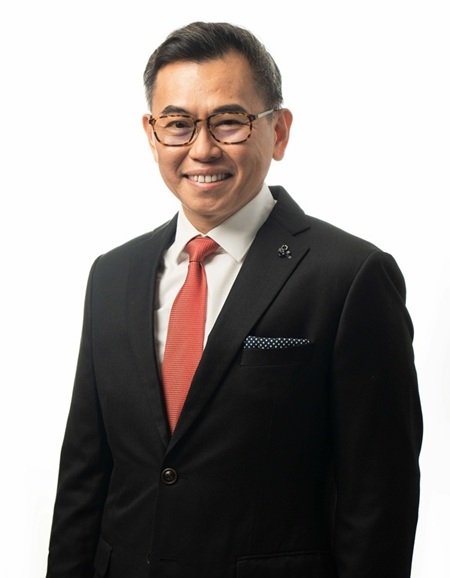
TT: Thank you for meeting with us today, Adj Prof Chua. To start off, how did you come to be in health regulation?
RC: I did not begin my career thinking that I would become a public health specialist and administrator or even a regulator. I initially intended to specialise in O&G and even undertook the O&G Part One examination. However, as part of my Medical Officer Posting Exercise (MOPEX), I was posted to MOH’s Hospital Services Division (HSD) in year 2000. Going from a specialty-based programme to broad-based training was very insightful and I gained much exposure to various challenging issues on the ground which I was unaware of. I worked on broader issues relating to levels of medical capability, reviewing the Table of Surgical Procedures, and the Health Services Development Programme to test new initiatives to be rolled out in hospitals, which were all very exciting work. Subsequently, then HSD Director Adj A/Prof Arthur Chern and then Director of Medical Services Prof Tan Chorh Chuan asked if I was keen to join public health as my specialty. I really enjoyed learning more and seeing how I could contribute to enhancing health systems and policymaking, so I agreed. I was also glad to have the opportunity to pursue my Master of Public Health at the London School of Hygiene and Tropical Medicine in 2002. After my return, I rotated through various MOH divisions – which gave me broader exposure in healthcare finance, epidemiology and diseases control, and clinical quality and patient safety – including the newly set up MOH Holdings (MOHH).
TT: That is quite a lot of exposure in MOH. Did these change your life course?
RC: Sort of. I discovered through these postings that I knew very little about other subjects such as marketing, human resources and economics, which were not covered in medical training. When I was rotated to healthcare finance, I realised I was ill-fitted to do the work because of my lack of economic knowledge, so I pursued a Master of Business Administration at the University of Nottingham myself.
An interesting opportunity came by in 2007. The Economic Development Board was positioning Singapore as the regional biopharmaceutical medical hub and sought to attract pharmaceutical companies to set up regional headquarters here. I decided to put what I learnt into practice and took an offer to be the managing director at Eisai, a Japanese pharmaceutical company. Over three years, I started three clinical research offices –in Singapore, Beijing, China and Mumbai, India – and brought many global trials to Asia. That was my first foray into the private sector. After that, I joined Shire, a UK pharmaceutical company, and replicated my work in Eisai to bring Shire’s global trials into Asia too.
TT: What prompted your return to the public sector?
RC: Two years into my stint with Shire, then CEO of HSA Prof John Lim called me and said, “I think it’s time for you to come back to the bright side.” I joked at first that I did not need to come back because I had always been on the “bright side”! More seriously, I was a public health physician who became a pharmaceutical physician; in fact, I was a “regulatee”, not a regulator. But John told me, “Very good. That is precisely what we want. We want someone who doesn’t know much about regulation, someone who comes in with a blank slate and brings a fresh perspective to regulations.” The challenge was, having worked under regulators, how I would adjust myself to be a regulator. I thought to myself that I should view regulations from a stakeholder perspective – how I would want regulators to be. Could I use regulations to enable rather than restrain businesses? I took up the challenge and returned to HSA in 2012 as Group Director of Health Products Regulation. That is a brief recap of how I became an “accidental” regulator.
Reshaping regulations to enable
TT: What would you say was your biggest challenge after returning to the “bright side”?
RC: The most significant incident occurred when I had just returned. It was an Easter Sunday morning when I reached for the newspaper to read, and to my horror, the front-page headline was “Docs upset over HSA safety rule”. HSA was facing a crisis over the rolling out of a regulatory framework for medical devices – a novel change since medical devices had never been regulated before. With this, a wide variety of items would be regulated as medical devices, from very low-risk items like thermometers to very high-risk items like implants. The industry was informed of a sunrise period of three years before the actual framework would be enforced.
However, the industry looks at regulations with a different lens – any regulation imposes the burden of regulatory compliance, which may impact the company’s bottom line. Some companies felt that Singapore was too small a market to be worth the cost and hence decided to pull out. Can you imagine doctors losing access to medical devices that they have used for years? Naturally, there was a great deal of discontent with the situation.
TT: The front page! That must have been dramatic. What did you learn from that incident?
RC: The most valuable lesson I learnt is that regulation is not just a science but an art – an art of communication. Regulations come in the form of laws, and generally, stakeholders focus on the practical compliance of the law, but legal jargon gets in the way. What stakeholders want is, “Tell me in simple and clear layman terms what you want me to do and how to comply.” It is key to work closely with stakeholders to better support their compliance. Rushing to implement a piece of law when no one is ready to comply is doomed to failure. It is always easier to move upstream to help the stakeholders to comply than to move downstream to take enforcement actions.
CT: In short, stakeholders are focused on the process and pathway, and how it impacts their business and practice.
RC: The traditional regulatory mindset was more rigid and less accommodating – “I have this set of regulations, and you must comply or be in breach of the law.” If it was not covered in the law, then you could not ask for exceptions; it was “my way or the highway”. The regulatory framework was thus focused on strict enforcement and less so on enabling stakeholders to innovate, providing little flexibility to regulatees. Having come from the industry, I understood that this rigid approach would only create friction between the Government and stakeholders. I still recall from my industry days how we were the ones with the scientific expertise in research and development for pharmaceutical drugs, medical devices or cell and tissue therapy products, while regulators often lagged behind. As such, innovations could not be deployed quickly enough when regulators were afraid of embracing them due to concerns for patient safety. Hence, what we needed was agility, engagement and collaboration.
That is where regulatory sandboxes are useful. We have a saying that when approached with a request for something innovative or unique, if we as the regulator are uncertain, our first instinct would be to say no. However, I would reframe it to ask, is the new product or service good for our people? Would it help enhance the national system? If so, is there another way of doing things? And if we do not know the answer to these questions, instead of saying no, we should focus on working together with the industry to understand what the science is and how we can facilitate the industry to benefit the health of our population.
I believe that by and large, people do not come into the medical and biopharmaceutical industry trying to do bad. Of course, there will be bad eggs, but only a minority. Should regulations be so tight because of this small percentage of bad eggs and disincentivise the majority who are good, or should regulations be kept simple with extra vigilance only for the small percentage of bad actors? In the latter, one must come down very hard on bad actors when they are caught, to act as a deterrence.
CT: Going back to your journey, what came after your stint as Group Director of Health Products Regulation?
RC: After successfully transforming the products regulations in HSA, I moved to MOH Health Regulation Group in 2017. The next item on the agenda then was to revamp the Private Hospitals and Medical Clinics Act (PHMC), which was an archaic premises-based regulation that only covered establishments with four walls and a door, such as hospitals, medical clinics, nursing homes and laboratories. The Act was set up in 1980 and had very prescriptive requirements such as specific distances between beds, having a sink, etc. This was appropriate in the olden days when a clinic was simply a clinic seeing physical consults and a hospital was simply a hospital managing inpatients. But as a result, the PHMC could not accommodate new concepts such as virtual telemedicine or Mobile Inpatient Care @ Home. Going back to my previous point, if we had retained a rigid mentality, failing to account for such new care models in the regulatory framework would mean you cannot conduct telemedicine or allow inpatients to be managed in the community. That cannot be the case, so we had to see how we could evolve this regulation.
We thus decided to move from a premises-based regulation to a services-based one, accommodating different modes of service delivery by turning the focus of the legislation to the services provided. We had seen radiological buses and such services being launched, and we wanted to enable them. After all, meals on wheels and maids on wheels were commonplace, there was nothing precluding medicine on wheels. What makes having a home medical service, where you do not own an office with the intent of reducing overheads, different from home dining services? So, we developed these modes of service delivery to help enable the industry to innovate new services and models.
Ongoing regulatory efforts
TT: What are you working on now that you are CEO of HSA?
RC: Our key area of focus is to streamline and align our regulations across all domains in MOH, HSA and the professional fronts. One of the frustrations faced as a service provider is acquiring approval from multiple parties when rolling out something new. And with every new device and technology, there is a need for a great deal of cooperation between regulatory authorities to avoid conflicting results. Artificial intelligence (AI) is one such new technology blurring the lines between regulatory categories. Hence, our aim is to align and provide regulatory clarity, reduce inefficiencies and make life easier for stakeholders.
As an example, when we wanted to start a sandbox for pharmacist vaccination services, HSA had to approve the retail pharmacy licensing and the vaccines administered. Then, MOH had to create a regulatory sandbox to approve the pharmacist vaccination based on certain qualifying criteria. Finally, to ensure that the pharmacists are able to administer the vaccines safely, appropriate training had to be rolled out for them.
TT: That sounds like a great deal of behind-the-scenes work. It seems your journey involved a lot of flexibility.
RC: I would say, agility.
TT: Was this something you figured out on your own or something you learnt from the people who guided you along the way?
RC: There were certainly many seniors who guided me on my journey, while I also developed this sense of agility from my own experiences, such as the 2012 medical device crisis and my experience in what some may call the “dark side”. Agility is crucial to avoid the stereotype of being in an ivory tower, because policies should not be rolled out without understanding the implementation details. Policy is implementation. If you roll out a policy without sufficient understanding of the situation on the ground, you will simply end up with a whole set of regulations that are not implementable while losing the stakeholders’ trust – and that would be disastrous.
Hence, it is important to engage with the stakeholders. Some say that this consultative way is long-winded and taxing. When you consult stakeholders, you will never get 100% concurrence, and it can be frustrating to manage disagreements. But if you take the time and effort to explain the policy intent, why some rules are needed and get everybody on the same page by understanding the trade-offs, then even if we agree to disagree, the final roll-out will be much smoother and you will gain everyone’s trust and confidence.
TT: Who were the people who guided you and gave you pearls of wisdom along the way?
RC: The past Directors of Medical Services, Prof Tan Chorh Chuan, Prof K Satku, Prof Benjamin Ong and current Director-General of Health Prof Kenneth Mak, my past mentors such as the previous CEOs of HSA, Prof John Lim and Dr Mimi Choong, and past Deputy Directors of Medical Service such as Dr Chew Suok Kai and Prof Lee Chien Earn, provided lots of guidance. The past Permanent Secretaries and fellow Deputy Secretaries I worked with were also very facilitative and encouraging. They gave me the inspiration and autonomy to implement my vision and were keen to work with me on it. Of course, I was also honoured to be part of the SMA Council in the 2000s and many seniors like Dr Lee Pheng Soon and Dr Wong Chiang Yin gave me much valuable advice, even up till today. Apart from the senior management, the teams working with me were just as important. Firstly, it is important to communicate my vision and what we want to achieve together, then get the right teams together who are aligned with this vision. Change is inevitable and will often be uncomfortable. We must acknowledge this and always recognise and reward the teams for the success. We celebrate not just the big wins, but the small wins as well and acknowledge the good work done, to sustain everyone’s momentum in the journey of change. Remember, TEAM stands for Together, Everyone Achieves More. We can only go far and make bigger changes as a team.
CT: Since you are leading these changes in Singapore, what do you think is our advantage compared to other countries?
RC: One of the major problems that stakeholders in other countries consistently face is the issue of bureaucracy, particularly in larger countries with both state and provincial- or state-level regulations. This makes their regulatory regime not as agile and efficient. Fortunately, Singapore is small, and by virtue of being small, it is much easier for us to move and coordinate, thus faster and more agile.
CT: When you were approached to be CEO of HSA, how did you feel about it? Did you feel that it was a natural progression of your career?
RC: I was very honoured to take on this role because I view regulation as being about shaping what the future of healthcare will look like, including new care models, new services or new technologies to benefit Singaporeans or even the world. So, in a way, this is a good progression of my efforts in transforming regulations to be an enabler and to be more pro-enterprise.
CT: Could you tell us about the regulatory plans for digital health services?
RC: The whole healthcare system is undergoing a big shift toward digitalisation, not just locally but globally. Singapore must also keep pace and explore digitalisation to benefit patient care. We are hence rolling out the Health Information Bill (HIB) which will mandate all licensed healthcare service providers to contribute key medical data into the National Electronic Health Record (NEHR). Our key objective is to facilitate continuity of care for patients, particularly those with chronic conditions and the elderly. Patients who cannot recall past medical problems can have their histories checked on NEHR so doctors may provide safer and better quality care. This also serves as a good reference for patients who are unable to recall the names of the drugs they are allergic to, medications and dosages they were on, etc. Duplicate tests such as blood tests or X-rays can also be avoided.
In fact, HIB was supposed to be rolled out earlier together with the Healthcare Services Act in 2020, but we decided to delink the two and postpone HIB due to the SingHealth cybersecurity breach in 2018. We redoubled our focus on the cybersecurity aspects of the HIB, as the key thrust of the HIB is to enable and mandate the contribution of data to the NEHR, and to enable licensees to procure the necessary systems that are safe and secure for connecting to NEHR. We needed to ensure that healthcare providers’ processes and governance structures promoted a culture of cybersecurity.
While contribution is mandatory, I would like to highlight that accessing NEHR is not mandatory. There is a misconception that once your IT systems are connected to NEHR, you are obligated to constantly refer to it. Our stance is that NEHR is a complementary and supplementary tool to clinical care. Physicians should always stick to the gold standard of proper history-taking and physical examination. And only if you think that your patient does not seem to be able to provide a coherent history or is unable to recall certain details, then NEHR can be used to obtain the appropriate information to support the clinical management.
TT: So, the heart of HIB is supporting continuity of care.
RC: Yes, that is correct. From a policy point of view, this idea sounds very simple and intuitive. But when we conducted consultations, the implementation turned out to be much more complex.
Firstly, while we wanted to support patients’ continuity of care, we noted during our public consultations that there is a small group of patients who may want some form of autonomy to determine who can access their health data. Hence, we created an option for patients to opt for access restriction, ie, they can select which service providers can access their NEHR health data. These access restrictions will only be lifted in the event of a medical emergency so that doctors are able to “break the glass” and view the NEHR information to render the appropriate medical care expeditiously.
To ensure that we engender trust of the summary health data held in NEHR, there was a need to develop and roll out the appropriate safeguards to protect the data. One feature we considered implementing was a ping upon access of the patient’s NEHR records, but this could potentially become overwhelming for patients, so we decided on an access log instead, which will be made available on HealthHub. That way, patients detecting any anomaly in their access logs can escalate to us and we can investigate accordingly.
As we continued exploring the nitty-gritty details of HIB implementation, more operational issues cropped up, such as how smaller service providers will be able to digitalise and meet the data and cybersecurity standards stipulated. So, we had to assure service providers that we would be working on a list of whitelisted information technology (IT) vendors who have IT systems already compliant with NEHR standards, to ease the hassle of searching for NEHR-compatible systems. Costs and compliance have generally been the commonly cited concerns, so we will similarly be providing some grants, training and support packages to help service providers meet the regulatory requirements. And on that note, we will also be putting in a sunrise period for our service providers to meet HIB requirements, as we know that it is not possible for everyone to meet the requirements as soon as the Bill is read in the first quarter of 2026. So do not worry, we will definitely support and train service providers and professionals and help the vast majority get ready before enforcement.
Truth is, while we can come up with the best policy and legislation which may benefit patients, each stakeholder will have very different concerns which we need to engage and listen to, to maximise stakeholders’ regulatory compliance.
TT: It seems that your experience with the 2012 crisis impacted you greatly.
RC: It was a very impactful lesson. Given the evolving state of medical practice and technologies, we must be very – again, back to the word – agile. We must be sufficiently open-minded to review our regulations if needed. And when unclear, be prepared to engage, clarify and get everyone on the same page.
TT: Coming to a more current topic, how does this differ from the recent reclassification of etomidate and the crackdown on vapes? How is the regulation for that, which came very fast, different from HIB?
RC: That is a very different kind of regulation. What I highlighted earlier is about regulation which seeks to enable innovative care models and technologies, while this regulation deals with a prohibited product. We enhanced our regulations due to a perceived “lack of deterrent enforcement measures” on vaping, particularly so when addictive substances like etomidate are laced within the vapes. In addition, we take escalating enforcement measures. For example, a first-time general vape offender will receive a fine. But when one re-offends, this means that some form of addiction has kicked in, prompting the need for rehabilitation now included in our enforcement regime. Similarly, when the consumers’ vapes include addictive substances like etomidate, mandatory rehabilitation is needed to help them kick the habit. But when it comes to the suppliers, we take a much more stringent enforcement stance against them because we need to stem the supply to curb the demand. Hence, the classification of etomidate as a controlled drug under the Misuse of Drugs Act was needed to take firmer action, including caning, against suppliers. This is however an interim measure, and we are reviewing our current Tobacco (Control of Advertisement and Sales) Act to see how we can have a more “fit for purpose” legislation for vapes and those laced with addictive substances in the first quarter of 2026 – so stay tuned for that.
Preparing for the future
TT: One component of agility is being able to predict forthcoming issues. How do you approach predicting the future? What issues are on your radar?
RC: Horizon scanning is very important. In my industry days, we had to project ahead the pipelines of pharmaceutical products that we need to launch in the market to target the disease priority areas in the world, to maximise benefits for patients. Similarly, a regulator cannot be unaware of what is coming. One often hears that regulators lag behind, which is what I am most afraid of – that stakeholders want to roll out new products or technologies but are put on hold because the regulatory capability has not been built up. Hence, it is vital for us to keep track of potential issues through scanning the Internet and engaging the industry closely to understand the new pipelines under development. This lets us prepare our capabilities accordingly and be ready to enable when the time comes. Even if we are not ready, then – again back to my agility – we must be ready to determine if this warrants a regulatory sandbox so that we can co-create the regulations accordingly.
Some issues on our radar include precision medicine, AI and genomics, which will disrupt how healthcare is delivered to our patients. I also see new services such as longevity and wellness services popping up. It seems at first glance that longevity and wellness need not be regulated, since they fall under general health and wellness. Lifestyle modifications such as exercise, eating and sleep are not problematic. But it becomes a grey area once longevity services make certain claims which may not be evidence-based. If one states that it can manage your chronic conditions better or even increase your lifespan – although they do not specify by how many years, only that it can increase your lifespan – should we step in as regulators?
Increasingly, it is important for us to partner patients in our regulatory journey as well. We need to conduct more consumer education to enhance their literacy on health choices and to be more discerning on knowing what misinformation is, and what to and not to consume. As regulators, our responsibility is always to safeguard patient health and public interest, but our resources are finite and we cannot be regulating everything. If it is a matter of efficacy, regulations may not always be required for lower-risk products or services because that can be a matter of the patients’ responsibility – caveat emptor. But for higher-risk products like cell and gene therapies where safety is of paramount importance, we will have to step in and regulate.
CT: What about future challenges and opportunities on the ecosystem level?
RC: One challenge we are working on now is how to enable more precision medicine initiatives and get patients to step forward and test if they have any specific genes for specified genetic conditions. If detected early, this could have preventive benefits for the patients and their close family members. But some concerns surfaced include how genomic information should be stored and whether genomic information might be provided to the insurance or employment sectors. This can result in discrimination issues and result in people not stepping forward to do the genetic testing, which would be a wasted opportunity for us to help these patients detect their genomic conditions earlier. Hence, we rolled out a moratorium in 2021 to disallow the insurance sector from acquiring genomic information. We are now considering its inclusion in legislation, to make the acquisition of such genomic information by insurers or employers a punishable offence.
Again, though this sounds very simple in theory, we will have to see how to operationalise this and we need to engage the various impacted stakeholders, including service providers, doctors, dentists and insurers.
CT: In terms of regulation, it seems you take a very closely engaged approach vis-a-vis other countries who are more reluctant to work so closely with stakeholders. Could you share your perspective and leadership take on this?
RC: My perspective is that we as regulators may not fully grasp the science, technologies or operational practices behind the new service or product. Hence, we can either develop a piece of legislation that no one can meet or one that is “fit for purpose”, suitable for the majority to comply with and still be able to deliver their services or products safely to patients. Engaging with and hearing from our stakeholders is an effective and efficient way of achieving this. In this process, we build trust and confidence that we as regulators are there to facilitate rather than hinder. We also put in place a regime that will not add too much regulatory burdens and costs, lest these add to business costs and be passed on to patients. In addition, the stakeholders will be more willing to raise and escalate any safety issues promptly and work with us to address them. That being said, I also acknowledge that there should be some independence between regulator and regulatee. The bottom line is that while we work with the stakeholders, we do not take their demands on how the regulations should be enacted. We do not abide by regulatory capture but always take the safety of the patients into consideration. As you can see, this balancing act between safety, innovation enablement, regulatory agility and efficiency is not an easy task, and I often feel like a juggler ensuring that “no balls fall onto the ground”.
CT: So, it is a partnership approach.
RC: [laughs] Sort of. Since I am a marriage solemniser, I compare this partnership analogously to a marriage: two partners coming together who must trust each other and work through problems together for the greater good.
CT: Apart from engaging the industry, it seems important to have healthcare professionals working in HSA and the regulatory space. What do you think about having more doctors, nurses and pharmacists join this space?
RC: We definitely hope to get more healthcare professionals to join this space. We have some pharmacists in HSA, but we definitely need a variety of other healthcare professionals such as doctors, dentists, nurses and allied health professionals joining us if we want to enable the future of healthcare together. It is crucial for healthcare professionals to understand and be immersed in this regulatory landscape. But there is a dominant perception that regulation is very dry and legalistic, like being policemen. As a result, few people are keen on working in the regulatory field.
TT: You are right, I do have these impressions of regulatory work. Even after hearing from you, I still have these ideas in my mind. [laughs]
RC: What is most important about working in regulation is that you can be part of a movement to change the healthcare landscape. You asked earlier about other countries. Other regulatory authorities I visited, such as the US, Europe, Australia and other Western countries, have many healthcare professionals working in there, figuring out how they want to use regulations to shape the future, which is what I consider regulations to truly be about. Healthcare professionals bring to bear the knowledge and expertise of their field to collaborate with their peers and the industry, and to craft the right regulation to enable innovations within the field safely. The US Food and Drug Administration and Australia’s Therapeutic Goods Administration have whole panels of doctors working with the regulators to evaluate new drugs and devices.
TT: What percentage of such regulatory panels is made up by doctors?
RC: Close to 50%. The regulators depend on a lot of doctors, and they have a large patient support group to work with as well.
TT: That is big! Our doctor presence in Singapore’s regulatory bodies is likely quite small, right?
RC: Ours is very rudimentary, but this is an aspect that I hope to build up over time. I am trying to see whether we can build a MOPEX track to bolster this. However, what is really needed is to break the mould and change the notion that regulatory work is very dry. Truth be told, I had the same impression when I first joined as well, so I have been working on changing that impression. Though I think many people still like the adrenaline of working in other specialties.
CT: Or working on curing cancer. I think the enforcement and punitive aspects of regulatory work turn a lot of people away. However, this emphasis on enabling sounds very progressive. Would you say that we are quite progressive internationally in terms of leadership?
RC: I would say that we as a country is progressive. Many nations look to us for insight because as I have said, we are much smaller and more agile, so we are able to make very innovative regulatory policies, such as sandboxing and continuous engagement with our stakeholders. I am trying to see how we can become a global regulatory thought leader in health products, services, information and professionals, and to build up a robust competent and well-connected pool of regulatory talents. So do join me in this regulatory journey if you are keen to be part of a movement to shape the new healthcare landscape!
Outside of work
TT: Moving on to more personal questions, I am curious about how you became a solemniser.
RC: That was about 20 years ago in 2005. Back then, a lot of solemnisations were conducted at the Registry of Marriages (ROM). Then came a need for the ROM to expand its capacity, and just like how we went from hospital to community care, they also allowed more external solemnisation and hence had to increase the number of licensed solemnisers. I was still working with MOH at the time, and volunteers were sought to help with this. Since I did not end up in O&G, I decided to volunteer to be a solemniser and help deliver marriages instead. Anyway, this is a very joyous community work, giving back to society in an enjoyable and meaningful manner, so I gladly volunteered. And how time flies, I have been doing this for 20 years, and I went from solemnising friends’ weddings to now the kids of my friends and the junior healthcare professionals.
CT: I understand that a lot of doctors go to you and Prof Low Cheng Hock for their solemnisations.
RC: Correct. Prof Low and I partner and support each other in this from time to time, and where we may help cover each other’s solemnisation requests if we are not available.
TT: Looking back, do you have any regrets not going into O&G, or do you miss attending to patients?
RC: No regrets, but yes, of course, I miss seeing patients, so I still keep my practising certificate, just in case [laughs]. But I also enjoy what I do now because it gives me a broader perspective of what I can learn, and it helps the public service to achieve more for the whole healthcare ecosystem, impacting more stakeholders, including the industry, professionals, patients and their caregivers.
TT: Which day-to-day practice might not necessarily give you.
RC: Day-to-day practice would teach me deep knowledge, but primarily knowledge within that specialty. What I currently do in regulatory work encompasses almost any subject you can think of. When I started in Eisai, my work only involved pharmaceutical drugs. With product regulation, I had to understand drugs, medical devices, cosmetics, supplements, traditional Chinese medicine, advanced cell tissue therapy products and many more. I had to understand them fully from the policy angle, from manufacturing and how they are registered to post-market safety alerts and how to manage enforcement. Moving over to services regulation, I had a similar learning curve. I had to learn about hospitals, family medicine, dentistry, laboratories, nursing homes, home care, etc. Then when it comes to HIB, I had to learn about digitalisation, data and cybersecurity. This broader set of skills and competency building really excites me.
CT: Tell us a little about your pastimes outside of work that help you relax.
RC: Oh yes, that is very important – I also need some form of work-life balance. I make sure to keep at least 30 minutes to an hour of my time every one to two days to do something outside of work and have some “me time” to pause and reflect. I am quite physically active to keep myself healthy and fit, so I do dragon boating, running, trekking and also go to the gym. And now like many, I join HYROX once a year. But I also enjoy reading, gardening, cooking and travelling.
TT: And solemnising.
RC: Yes, solemnising too. I do a little of everything, but I am probably not that good in anything. [laughs] I believe that if you want to be a leader, you should also be physically fit. Otherwise, you will have trouble sustaining your work and keeping a clear mind. For me, I began to work on my fitness because of a health scare ten years back. I became quite plump when I was in the industry, ballooning to over 90 kg. Of course, that led to developing hypertension and hypercholesterolemia, and because of that, I decided to keep fit.
CT: What was effective for you in your weight-loss journey?
RC: I can tell you that dieting makes up 60% to 70% of the effort. No matter how much I exercised, my weight would not go down that much. I ended up cutting my diet drastically. No more laksa, char kway teow, orh lua and all the oily food.
CT: Once you hit your maintenance weight, you can still enjoy them though.
RC: Yes, definitely. Once a while is okay, you just have to exercise more after such a meal. Ultimately, you must always eat in moderation. As I bring my weight down, my age is also going up, and my basal metabolic rate is decreasing.
CT: Which countries do you enjoy travelling to for leisure?
RC: Like many, Japan comes up top. Probably Hong Kong too. And of course, London, UK where I did my postgraduate. Norway and Iceland were also scenic. I enjoy discovering new places too, and I hope to have some time to explore more exotic locations, like Peru, Patagonia, Cape Town, Bhutan and Mongolia, among others. If anyone has good travel itineraries to share, please let me know too.
Closing thoughts
CT: Do you have a final message for our readers to take home?
RC: I would say, do not fear regulations or regulators. I think a lot of people fear regulators, or even worse, they scold regulators! Nobody loves regulators. People often think poorly of us or find us a bother. But we are truly here to engage, help and work together with all stakeholders for patient safety and to enable innovations. This is my challenge, to change how people view regulators and to get them to join us and make a difference by enabling the healthcare of the future.
Part of this is that people often judge regulators by the harshness of our enforcement and neglect the collaborative and enabling aspects. Of course, when regulations are being flagrantly flouted, it becomes necessary for us to wield our stick. But by and large, much of regulation involves this partnership and collaboration, and I hope people will come to appreciate that. As the Chinese saying goes: “平生不做亏心事,半夜不怕鬼敲门.” There is nothing to fear about regulators if everyone is compliant and doing good.
TT: Wise words indeed. Thank you for your time today, Adj Prof Chua!
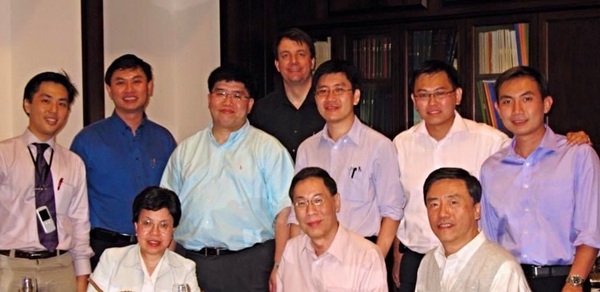
Hosting Dr Margaret Chan, then Director-General of World Health Organization, with SMA colleagues when I was the liaison officer for her first official Singapore visit in 2006
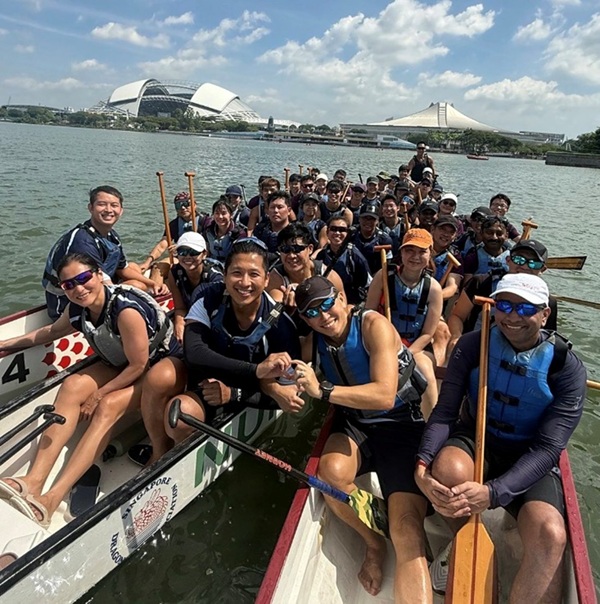
The routine weekend rowing with the MOH Health Dragons at Kallang

Joining Team HSA and MOH at HYROX 2025

Scaling Mount Kinabalu at 4,095 m
